
When you think about the beginnings of the automotive industry, one image probably comes to mind: a black, angular vehicle gliding along an unpaved road. However, the history of the Ford brand is much more than just a story about old cars. It is a fascinating journey from workshop trials, through the industrial revolution, to the contemporary challenges of electromobility. The American company not only created some of the most important vehicles in history, but literally changed the way the modern world works. Discover the history of the blue oval, full of spectacular successes, but also painful lessons.

Henry Ford – a visionary who was not afraid of failure
Before the empire was born, there was a man with passion and dreams. Henry Ford, for it was he, did not achieve success right away. His first vehicle, constructed in 1896, was called the Quadricycle and resembled two bicycles connected together rather than a modern car. The young engineer gained experience working alongside Thomas Edison himself, who became his mentor. Interestingly, the Ford Motor Company, founded in 1903, was not this entrepreneur’s first company. His earlier venture, the Detroit Automobile Company, failed due to high production costs and low product quality.
These early failures shaped Henry’s philosophy. He understood that the key to success was not to create toys for the rich. The goal became to produce a car that the average factory worker could afford. The Ford was to be easy to operate, cheap to repair, and reliable. Such an approach sounded crazy at the time, but it was this vision that laid the foundation for one of the largest corporations in the world.

The Industrial Revolution and the Ford Model T
The real breakthrough came in 1908. That was when the Ford Model T, the vehicle that motorized America, entered the market. Its design was ingenious in its simplicity, but that was not its greatest innovation. The key moment came in 1913, when a moving assembly line was implemented at the Highland Park plant. This solution reduced the assembly time for a single car from twelve hours to just 90 minutes. As a result, the price of the car dropped dramatically, making it affordable to the masses.
Many myths have grown up around this model. The most famous of these concerns the paintwork. The company’s founder is said to have remarked: “You can have the car in any color you like, as long as it’s black.” The brand explains this phenomenon on purely practical rather than aesthetic grounds. At that time, only a black paint called Japan Black dried quickly enough to keep up with the pace of the production line. Other colors would have caused bottlenecks in the factory.
Another revolutionary step was the introduction of a $5 daily wage for workers. This was twice the market average. This move was not solely motivated by the owner’s kindness. Henry wanted his employees to be able to afford the product they were manufacturing. This built a loyal middle class and drove demand for the Model T.
Expansion, war, and luxury – the interwar years and World War II
After the huge success of the Model T, the company did not rest on its laurels. In 1922, it acquired the Lincoln brand, which allowed it to enter the luxury car segment and compete with Cadillac. Ford had to prove that it could produce not only cheap means of transport, but also limousines of the highest standard. The next milestone was the introduction of the V8 engine in a cheap model popular in the 1930s. This power unit provided excellent performance, making it the favorite choice of gangsters of the time, who needed fast cars to escape.
The outbreak of World War II changed the priorities of the entire industry. Factories halted civilian production and switched to meeting the needs of the army. The Willow Run plant produced B-24 Liberator bombers. The scale of this undertaking was unimaginable – at its peak, one aircraft rolled off the production line every hour. Ford’s history is therefore also an important contribution to the Allied war effort, which is often forgotten. After the end of the conflict, the company returned to its roots, offering new models to a society hungry for novelty.
Automotive legends – Mustang, GT40, and the F series
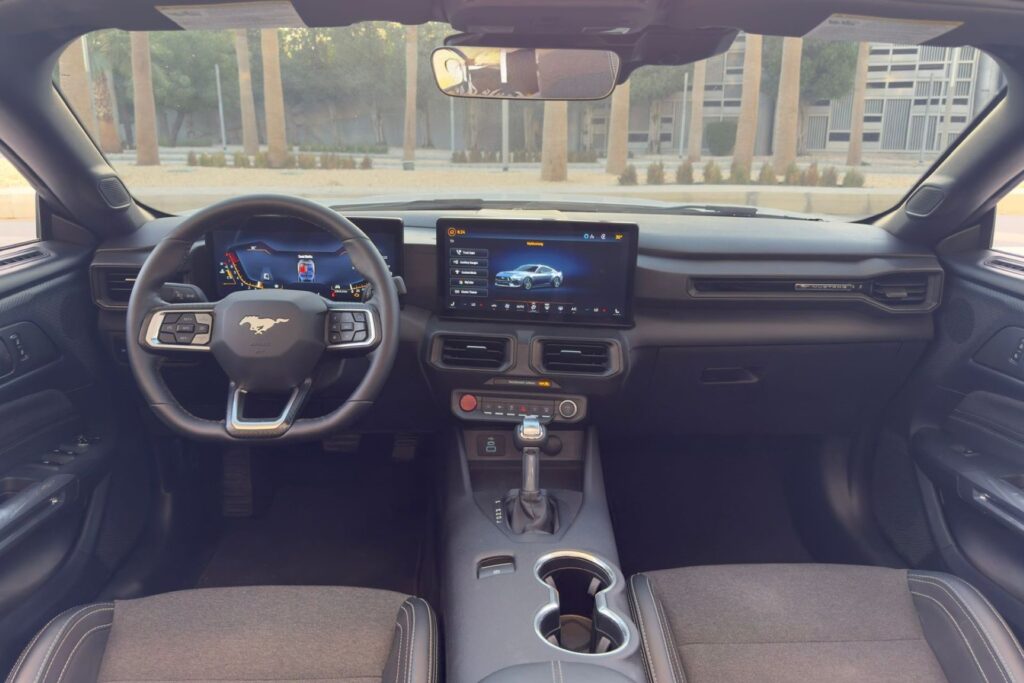
The 1960s saw the birth of icons that still capture the imagination of fans today. In 1964, the Ford Mustang made its debut, creating a whole new class of vehicles called “pony cars.” It was a sports car with a predatory look, available at a price acceptable to young people. Its sales success exceeded all expectations, and the silhouette of a running horse on the grille became a symbol of freedom.
Equally fascinating is the story of the GT40 model. It was created as a result of a personal grudge held by Henry Ford II, the grandson of the founder, after Enzo Ferrari broke off negotiations to sell his company at the last minute. The Americans decided to take revenge on the race track. The goal was achieved: the GT40 dethroned Italian cars in the prestigious 24 Hours of Le Mans race, winning it four times in a row between 1966 and 1969.
Workhorses cannot be overlooked either. The F series, led by the F-150 model, has held the title of best-selling pickup truck in the US for decades. It is these utility vehicles that have generated the most profit for the Detroit-based company over the years. Ford has also made its mark on the European market with hits such as the Escort, Focus, and Mondeo, which have motorized millions of families on the Old Continent.
Failed projects and difficult business decisions
Every giant has skeletons in its closet, and the Dearborn-based manufacturer is no exception. In 1958, the Edsel brand was launched. It was supposed to be the car of the future, filling the gap between cheap models and the luxurious Lincoln. The project ended in spectacular failure. Customers did not accept the controversial styling, especially the distinctive grille, and the name did not evoke positive associations. The financial loss was enormous.
Another difficult period came with the financial crisis of 2005–2008. In order to survive, the company had to implement a drastic recovery plan called “The Way Forward.” As part of this plan, Ford sold the prestigious brands it had previously acquired, including Jaguar, Land Rover, Volvo, and Aston Martin. This decision, although painful, allowed the company to remain financially solvent without having to declare bankruptcy, which was the fate of its competitors at General Motors.
The blue oval in the era of electromobility
Ford’s contemporary history is being rewritten in the context of electric drives. Interestingly, interest in this technology is nothing new for the company. Henry Ford and Thomas Edison experimented with electric cars over 100 years ago. In the 1960s, a prototype called Comuta was even developed, a small electric city vehicle, but it did not go into mass production.
Today, the company is putting all its eggs in one basket by pursuing an ambitious electrification strategy. In doing so, it is leveraging its strongest brands. The Mustang Mach-E, although an electric SUV and controversial among purists, is winning over the market with its modern design and performance. The F-150 Lightning, on the other hand, is bringing America’s favorite pickup truck into the zero-emission era.
Interesting facts about the Ford brand that you may not know
When exploring the history of the company, you will come across many facts that may surprise you. Here are a few of them:
- The famous blue oval logo did not accompany the company from the very beginning. It was only introduced in 1927 with the launch of the Model A, replacing more complex graphic designs.
- The company was a pioneer in the field of safety. It was one of the first manufacturers to introduce bonded windshields that did not shatter into small pieces during an accident, and offered seat belts in the 1950s.
- The number “40” in the name of the legendary GT40 racing model refers to its height. The car measured exactly 40 inches (approximately 102 cm) from the ground to the roof line, which gave it incredible aerodynamics.
Where is the automotive giant headed?
Looking back on more than 120 years of operation, you see a company that is constantly evolving. From a simple quadricycle, through mass production of combustion engines, to advanced autonomous and electric technologies. Ford is proof that adaptation is the key to survival. Today, the brand faces another challenge – transforming itself into a mobility service provider, not just a manufacturer of sheet metal and engines. Is the electric Mustang a worthy successor to the V8 legend?