
You are probably familiar with the distinctive cross symbol on the grille of passing cars. However, the history of Chevrolet is much more than just a recognizable logo. It is a story of a clash between two powerful personalities who changed the face of global transportation. Here you will learn about the turbulent lives of Louis Chevrolet and William Durant – men whose visions differed greatly. You will find out how the conflict between engineering precision and business acumen led to the creation of one of Detroit’s biggest giants. You will also understand why these vehicles have been popular with millions of drivers around the world for decades.
1911 – the year racing met business
It all began on November 3, 1911. That was when the paths of two extraordinary men crossed in the automotive heart of America. The first was Louis Chevrolet, a Swiss immigrant, an outstanding mechanic, and a fearless race car driver. His name was respected on the tracks at the time, and his technical skills were undeniable. The second figure was William Durant, a seasoned businessman and founder of General Motors, who had just lost control of his company.
Durant needed a big name to get back in the game. Louis dreamed of building perfect machines. Their collaboration was marked by tension from the very beginning. The Swiss wanted to build luxurious, fast, and refined cars that could compete with the best European designs. Durant saw things differently. His goal was to mass-produce cheap vehicles for the average American. The first model, the Classic Six, was impressive but expensive, costing over $2,000. This did not bode well for the commercial success that his partner wanted.
Who really came up with the Chevrolet logo?
The bowtie symbol is one of the most recognizable graphics in the history of marketing. However, many legends have grown up around its origins, which are worth clarifying. The most popular version says that Durant saw this pattern on wallpaper in a Paris hotel in 1908. He liked it so much that he tore off a piece of paper and brought it back to the US. Another anecdote, told by his daughter, suggests something different. She claimed that her father drew the design on a napkin during dinner, between the soup and the main course.
However, there is a more credible theory, supported by evidence. Researchers point to a “Coalettes” coal advertisement that Durant may have seen in a newspaper in 1911. That company’s logo was almost identical to the one we know today. The Chevrolet bowtie was designed to attract attention with its simplicity and symmetry. Regardless of which version is true, the Chevrolet logo has become an icon. Today, this gold cross is associated with reliability and the American way of life.
Takeover by General Motors and competition with Ford
The conflict between the founders’ visions quickly led to a split. Louis Chevrolet did not want to put his name on cheap cars, whose quality, in his opinion, left much to be desired. In 1914, he sold his shares and left the company. Unfortunately, unlike his partner, he did not have a head for business. He died many years later in obscurity, working as an ordinary mechanic in the factory that bore his name. Meanwhile, Durant masterfully exploited the success of the new brand.
With the profits from car sales, he bought a controlling stake in General Motors and in 1916 triumphantly returned to the position of president. He incorporated Chevrolet into the company’s structure as the leading brand. His main goal was to compete with the Ford Model T. The answer was the Chevrolet 490. It cost the same as its competitor ($490), but offered more. Customers received an electric starter and lighting as standard, which was a luxury at the time. This marked the beginning of the dynamic development of mass motoring.
The era of muscle cars and the Small Block engine – the birth of icons
The 1950s and 1960s were the golden age of American motoring. It was then that engineers from Detroit showed the world something that would forever change the approach to performance. In 1955, the Small Block V8 engine made its debut. It was a design that was ingenious in its simplicity: lightweight, compact, and extremely susceptible to modification. It was this power unit that became the heart of legendary models, defining the concept of American power.
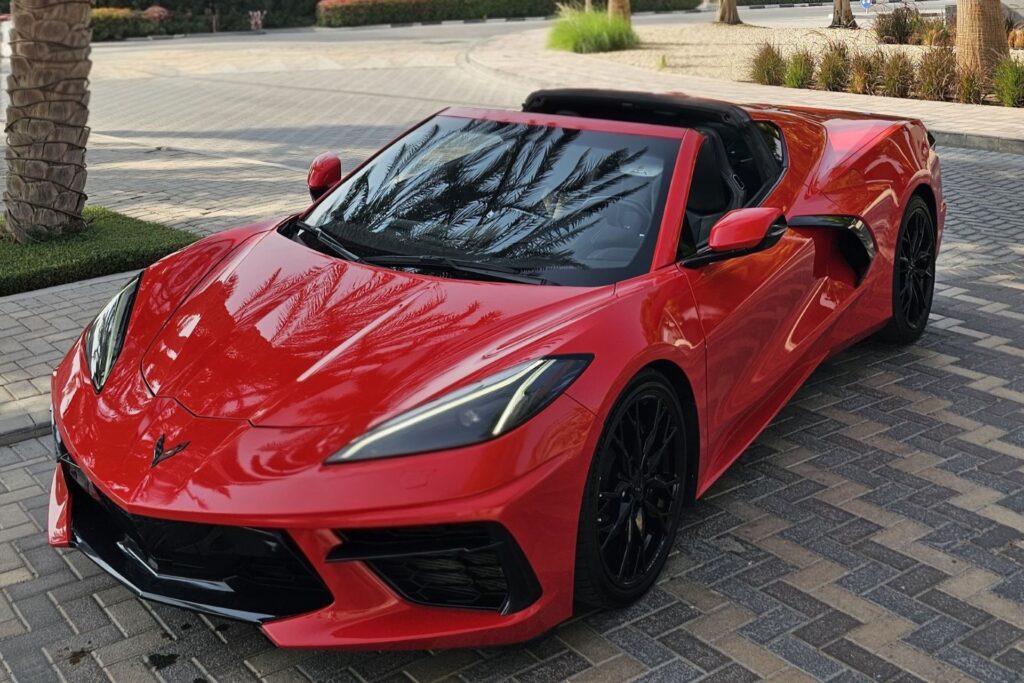
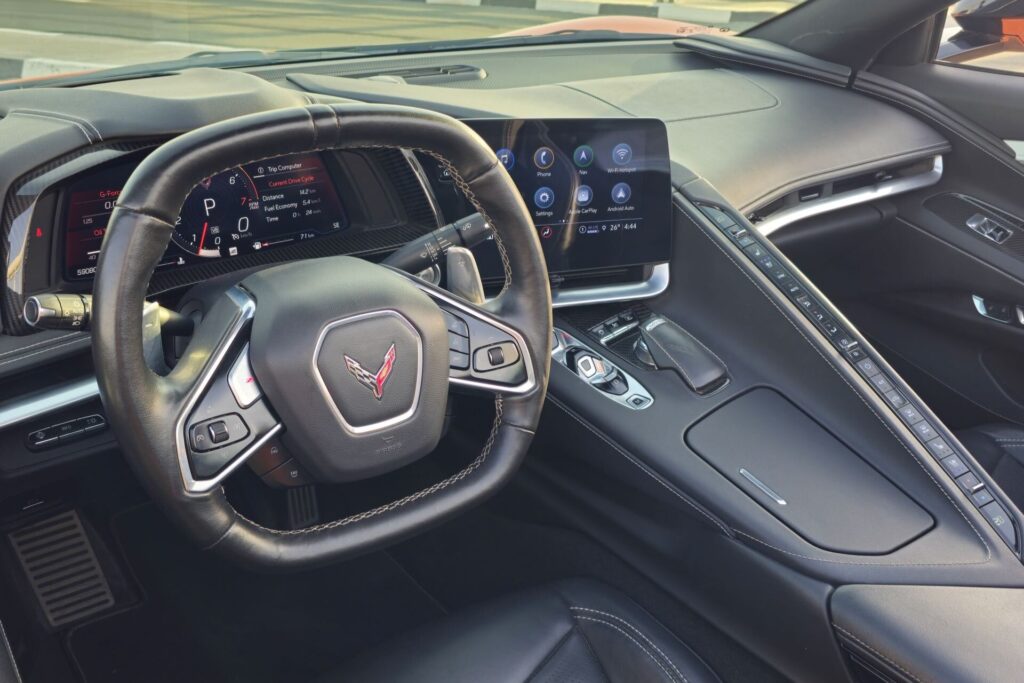
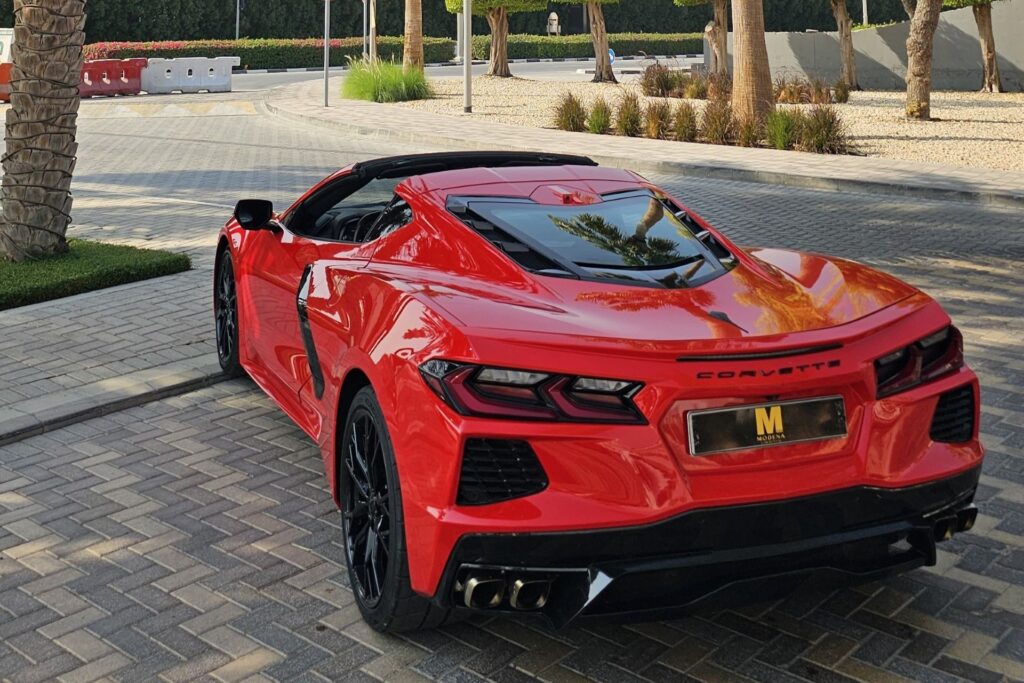
In 1953, the Chevrolet Corvette hit the market – the first post-war sports car from the US to challenge European roadsters. Initially underestimated, it eventually became a cult object. A dozen or so years later, in response to the success of the Ford Mustang, the Chevrolet Camaro appeared. This is how the Muscle Car category was born. These cars were not just for getting around – they offered freedom, adrenaline, and an incredible acoustic experience thanks to their powerful V8 engines. To this day, collectors pay astronomical sums for these classics.
Globalization and the “Korean episode” (Daewoo)
The turn of the 20th and 21st centuries brought completely new challenges for the brand. The company had to become a global player, offering cars on every continent. It was then that the decision was made to acquire the bankrupt Korean manufacturer Daewoo. For many fans, this was a controversial move, but from a business point of view, it was necessary. Thanks to this, models such as the Lacetti, Spark, and the popular Chevrolet Aveo appeared in showrooms.
These vehicles used Asian technology but were sold under an American brand. They were cheap, easy to use, and perfectly suited to the needs of European and Asian drivers looking for a budget means of transport. Although purists complained about the departure from the “American spirit,” this maneuver allowed the brand to survive the difficult times of the crisis. Ultimately, however, in 2015, GM decided to withdraw the brand from the European market and focus on other regions.
The future is electric – what next for the brand?
The automotive industry is currently undergoing its biggest revolution since the days of Henry Ford. The Detroit-based brand is not lagging behind and is boldly focusing on electric cars. It is the end of an era – the combustion engine Camaro is disappearing from the market, giving way to modern technologies. Engineers are now focusing on the Ultium platform, which will power a new range of vehicles.
The flagship example of this change is the Silverado EV. It is a powerful pickup truck that retains the utility of its combustion engine predecessors, but offers zero emissions and instant torque. The company is returning to its roots of innovation, this time in an eco-friendly version. The future of the “bowtie” is painted in the colors of electromobility, autonomous driving, and advanced digital systems.
100 years of Chevrolet history
The company’s more than 100-year history is a ready-made movie script. From the workshop of a brilliant Swiss engineer, through corporate intrigues, to the status of a global giant. Despite many ownership changes and technological revolutions, the distinctive logo on the hood still evokes emotions. Whether we’re talking about a classic V8 or a modern electric car, the legacy of Louis and William is still alive. It’s proof that passion combined with business vision can withstand any test of time.