
Discover the history of the Land Rover brand, which began in 1947, shortly after the war. At that time, the United Kingdom was grappling with a steel shortage and the need to increase exports. Rover was looking for a product that was simple to build yet useful in both rural and industrial settings. Maurice Wilks, the company’s chief engineer, drove a wartime jeep around his own farm. He noticed a gap in the market that a lightweight off-road vehicle could fill. Together with his brother Spencer, Rover’s managing director, he sketched the outline of the body on the sand of a Welsh beach. A year later, the sketch had turned into a finished prototype, known today among enthusiasts as the “Centre Steer.”
The Debut of the Series I and a design that surprised the market
The first model was unveiled in April 1948 at the Amsterdam Auto Show. Due to postwar steel rationing, the body was made of an aluminum-magnesium alloy. This solution proved to be a huge success, as it protected the body from corrosion and reduced the car’s weight. Under the hood was a 1.6-liter gasoline engine, previously used in Rover sedans. The steering wheel was positioned in the center, similar to that of a tractor, which made working in the fields easier. Four-wheel drive and a sturdy load-bearing frame allowed the Land Rover Series I to go where ordinary cars couldn’t. Already in its first year of production, the vehicle was exported to dozens of countries.
Series II and III and the Birth of the Range Rover
In 1958, the second generation, the Series II, was launched with a new body and a more powerful 2.25-liter engine. The next iteration, the Series III, appeared in 1971 and introduced a synthetic dashboard and improved brakes. At the same time, engineers were working on a completely new model designed to combine off-road capability with the comfort of everyday driving. Thus, in 1970, the Range Rover was born, equipped with a 3.5-liter V8 engine and independent suspension. The car quickly earned a reputation as a vehicle for every occasion, from farm work to prestigious outings. The first-generation Range Rover remained on the market until 1996, which is rare in the automotive industry.
Changes in Ownership – From Rover to Tata Motors
Its market success entangled the further history of the Land Rover brand in the turbulent fortunes of the British automotive industry. In 1967, Rover merged with Leyland Motor Corporation, and a year later, the giant British Leyland conglomerate was formed. From 1978 onward, Land Rover operated as a separate company, Land Rover Limited, formally independent from the group’s other brands. In 1986, the ownership structure was renamed the Rover Group, and eight years later, the entire company was acquired by Germany’s BMW. In 2000, BMW spun off its assets and sold Land Rover to Ford, while retaining the Rover brand for another buyer.
The latest twist came in 2008, when Ford sold Land Rover and Jaguar to India’s Tata Motors, creating what is now Jaguar Land Rover.
Discovery – the third pillar of the brand’s lineup
In 1989, the Discovery made its debut – a model designed to fill the price gap between the rugged Defender and the luxurious Range Rover. The first generation was powered by a 200 TDI direct-injection engine, which improved performance and reduced fuel consumption. The Discovery quickly won over families thanks to its spacious cabin and practical 7-seat configuration. Subsequent generations, designated by Roman numerals, introduced new platforms and off-road assistance systems. The Discovery Sport, launched in 2014, eventually replaced the compact Freelander in the lineup. Today, the Discovery family remains one of the three main pillars of the brand, alongside the Defender and the Range Rover.
Defender – the name that replaced the legendary Series
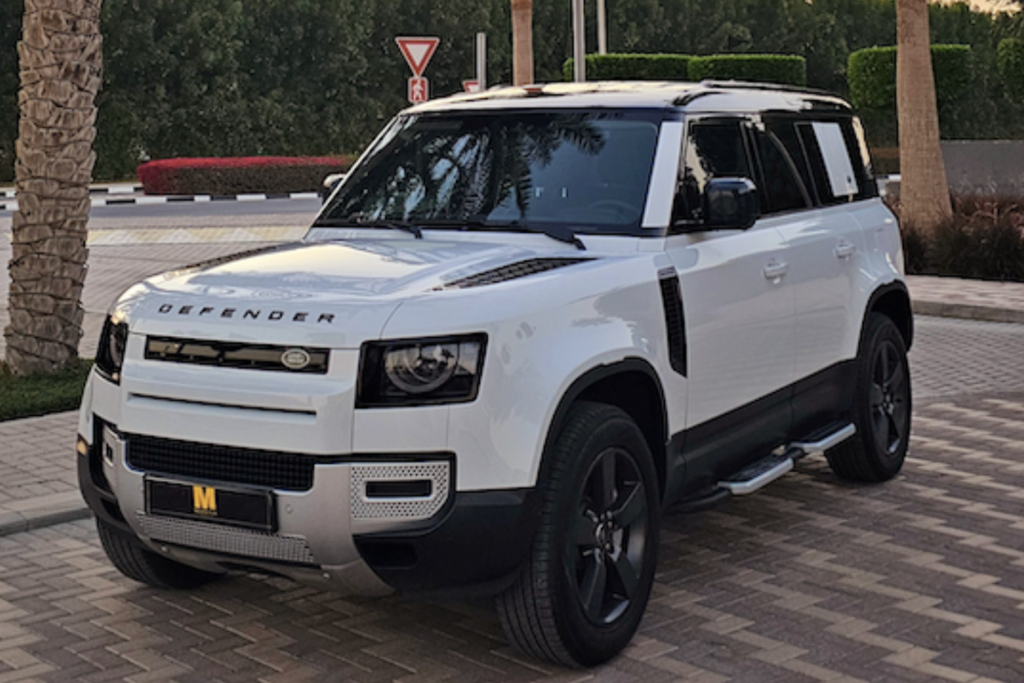
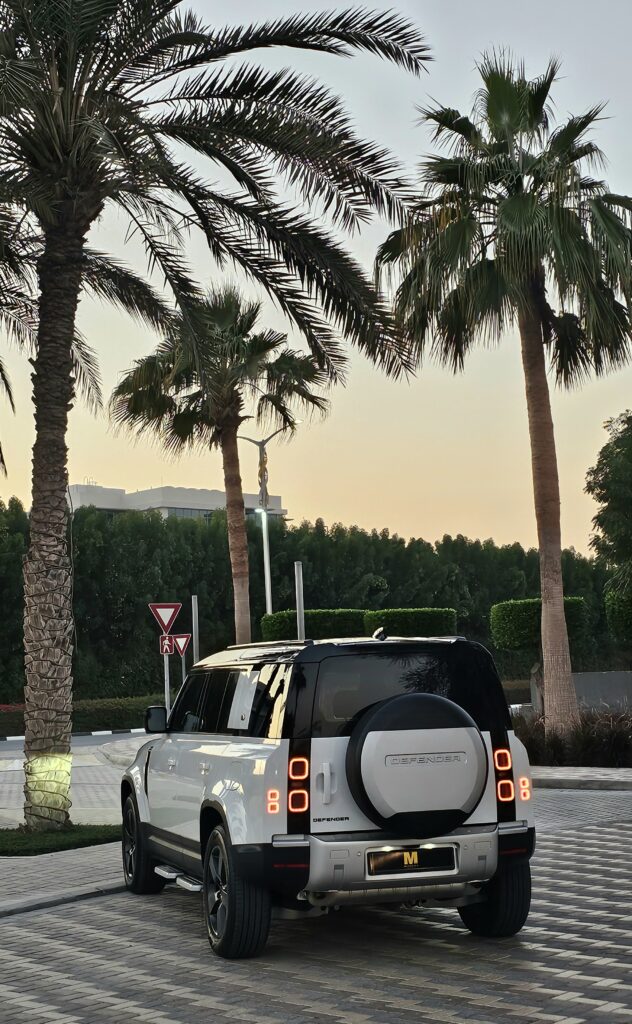
The name Defender did not appear until 1990, when it was applied to the existing Ninety, One Ten, and One Two Seven models. Previously, these vehicles were sold simply as Land Rover, without any additional designation. Its rugged styling and simple mechanics allowed the Defender to operate in deserts, jungles, and on scientific expeditions. The vehicle was also used by the military, fire departments, and humanitarian organizations across several continents. Production of the classic Defender ended in 2016, after nearly seven decades of uninterrupted presence on the market. Three years later, the brand unveiled an all-new generation, built on a modern monocoque platform while retaining its distinctive silhouette.
Land Rover Today – Off-Road Heritage with a Modern Twist
The current lineup includes three model families: the Defender, Discovery, and Range Rover, along with its derivative versions – the Sport, Velar, and Evoque. The brand develops its own off-road systems, such as Terrain Response and electronic hill descent control. It is also introducing hybrid and electric powertrains without compromising off-road capabilities. Expeditions, rallies, and humanitarian aid programs continue to build the brand’s image as a partner in challenging terrain. Land Rovers are also appearing more and more frequently in the premium segment, competing with luxury crossovers from Germany. Thanks to this combination of rugged utility and high comfort, Land Rover remains one of the most recognizable off-road brands in the world.