If you had to name one automotive brand recognized by everyone, regardless of their interest in cars, the answer is almost always the same. Yet the history of Ferrari is more than a catalogue of supercars and a list of trophies. It is the story of one man who spent his entire life chasing a dream born on the grandstands of a race in Bologna in 1908. To understand what Ferrari is today, you have to start right there.
Enzo Ferrari – The Man Who Started With Dreams
Enzo Anselmo Ferrari was born on February 18, 1898, in Modena, into the family of Alfredo Ferrari, the owner of a small metalworking and mechanical workshop. He was in contact with technology from childhood, but by his own admission his earliest ambitions had little to do with engines. He wanted to become an opera singer, then a sports journalist – as a teenager he wrote reports on local football matches for the Gazzetta dello Sport. Then one event changed everything.
In 1908, his father took ten-year-old Enzo to a race in Bologna – the Circuito di Bologna. Felice Nazzaro triumphed on the circuit at the wheel of a Fiat. For the boy, it was not a spectacle – it was a revelation. From that moment on, he knew his path led through the roar of engines and the white chequered flag.
Enzo’s youth was not without hardship. In 1916, he lost his father and his older brother Alfredo, both of whom died within a short time of each other. He himself barely survived the influenza epidemic ravaging Europe at the time. After the war, discharged from military service due to injuries sustained in combat, he sought his place in the world of motorsport.
For a time he worked on converting military vehicles for civilian use. It was then that he met Ugo Sivocci – a racing driver associated with CMN (Costruzioni Meccaniche Nazionali). That encounter opened doors he could never have forced open on his own. In 1919, Enzo made his racing debut at the Parma–Berceto event as a CMN driver. A year later he joined the Alfa Romeo racing team, and a chapter began that would last two decades.
At Alfa he held various roles: driver, sales assistant, and eventually head of the racing team. This long relationship with the Milanese company shaped him as a manager and visionary. It also shaped the man who would one day break with Alfa and go his own way.
Scuderia Ferrari – Before the Brand Existed
The history of the Ferrari brand, in the literal sense, does not begin in 1947, when the first car bearing the prancing horse logo left the factory. It begins earlier, in 1929, when Enzo brought Scuderia Ferrari to life – his own racing team fielding Alfa Romeo cars.
The team quickly gained a reputation as one of the best in Italy. Scuderia drivers won the Mille Miglia and the Targa Florio – two of the most prestigious road races of the era. Enzo had a talent for management and for choosing the right people, and it was here, not behind the wheel, that he saw his future.
In 1932, following the birth of his son Alfredo – known as Dino – he ended his driving career and focused entirely on the team. The Scuderia effectively became the racing arm of Alfa Romeo, and Enzo took charge of its racing division, a structure named Alfa Corse.
The year 1939 brought a turning point. A conflict with management – particularly with the then technical director Wilfredo Ricart – led to a parting of ways with Alfa. On leaving, Enzo was required to accept a non-compete clause: for four years he could not build sports cars under his own name or use the Ferrari name in an automotive context. For a man who had devoted his entire life to racing, this was an extraordinarily painful condition.
Auto Avio Costruzioni – Ferrari in the Shadow of War
To survive this period, Enzo founded a company called Auto Avio Costruzioni. Officially, it manufactured machine tools and aircraft components. The name contained no reference to Ferrari – such was the requirement of the agreement. Enzo observed the ban, but he did not abandon motorsport.
In 1943, he relocated the plant from Modena to Maranello – a small town in the province of Modena. The decision proved permanent: Maranello remains the brand’s headquarters to this day. During the Second World War, the factory was destroyed by bombing raids. It was rebuilt in 1946, and a year later the company changed its name to Ferrari S.p.A. The ban had run its course. Enzo was 49 years old and had had his plan ready for years.
1947 – The Birth of Ferrari. The First Car, the First Victory
On May 11, 1947, the Ferrari 125 S took to the track in Piacenza and presented the world for the first time with what a car bearing Enzo’s name truly was. The model was powered by a 1,500 cc V12 engine designed by engineer Gioacchino Colombo – one of the most accomplished automotive engineers of his day.
The number 125 in the name referred to the displacement of a single cylinder. Twelve cylinders, one and a half litres – and a sound that has since become synonymous with the brand. Only two examples of the Ferrari 125 S were produced. Neither has survived to the present day; their parts were used in the construction of the successor model, the Ferrari 159 S.
Two weeks after its debut, Franco Cortese won the Grand Prix of Rome at the wheel of the 125 S. It was the first victory in Ferrari’s history. In the months that followed, the brand appeared on the podiums of the Mille Miglia and the Targa Florio. It was clear that something more than just another sports car manufacturer had emerged from Maranello.
The Ferrari Logo – Where Did the Prancing Horse Come From?
If you had to name one symbol recognised by people with no knowledge of motorsport whatsoever, it would be the black horse on a yellow background. The Ferrari logo has a history deeper – and more tragic – than it might appear.
Francesco Baracca was Italy’s most successful fighter pilot of the First World War. He had 34 confirmed aerial victories to his name, for which he received the Order of the Crown of Italy. On the fuselage of his aircraft was a black rearing horse – the family crest of the Baracca family, well-known horse breeders from Lugo di Romagna. The pilot was killed in June 1918.
In 1923, following Enzo’s victory at the race on the Savio circuit in Ravenna, a meeting took place that would change the look of the brand forever. Baracca’s parents, including Countess Paolina, met the triumphant driver. The pilot’s mother proposed that he use her son’s emblem: “Put this symbol on your cars. It will bring you luck.”
Enzo accepted the proposal. To the black horse he added a yellow background, the colour symbolising Modena, his hometown. Below the horse he placed the letters SF, standing for Scuderia Ferrari. The emblem first appeared on a racing car at the Grand Prix of Spa – still on an Alfa Romeo, as Enzo was still working with that brand at the time.
In 1947, with the debut of the 125 S, the logo was modified. The letters SF were replaced by the word “Ferrari,” and the colours of the Italian flag – green, white and red – took on a distinct rectangular shape above the silhouette of the horse.
Where did the red come from? Many readers assume that Rosso Corsa was a matter of Enzo’s personal taste or an accidental tradition. That is not the case. In the early twentieth century, the International Automobile Federation AIACR assigned national colours to countries competing in races: the French raced in blue, the British in green, and Italy was allocated red. Ferrari adopted this tradition and maintained it long enough that today the red colour and the black horse form an inseparable pair.
Ferrari in Formula 1 – Present From the Very First Season
In 1950, Formula 1 held its inaugural season. Ferrari was there from the beginning and remains there to this day. It is the only brand to have competed continuously in every Formula 1 season since the championship was founded. For Enzo, racing was not a promotional tool – it was the very reason for the company’s existence.
The first victory in the series came a year after the debut. At the 1951 British Grand Prix, Froilán González drove Ferrari to triumph, breaking the dominance of Alfa Romeo. It was a symbolic moment – Ferrari had beaten the very brand Enzo had left just a few years earlier.
In 1952 and 1953, Alberto Ascari claimed two consecutive World Championship titles. Over the following decades, the colours of the Scuderia were carried by Niki Lauda, Gilles Villeneuve and Alain Prost. The most dominant era, however, came at the turn of the century: between 2000 and 2004, Michael Schumacher claimed five consecutive World Championship titles – a record that stands unmatched to this day. The last drivers’ title for Ferrari went to Kimi Räikkönen in 2007.
Key Moments That Shaped the Brand
The Death of Dino and the Birth of a Model Line
In 1956, Enzo Ferrari lost his son. Alfredo Ferrari junior, known as Dino, died at the age of 24 from muscular dystrophy. The event permanently changed the character of the founder – he became more withdrawn and, after this loss, rarely left the Maranello area.
In his son’s honour, Enzo introduced an engine bearing his name: the Dino V6 of 1957. From 1968 onwards, a separate line of models was sold under the Dino brand: the Dino 206 GT and the Dino 246 GT. It was a tribute expressed in the only language Enzo understood – technology.
The Conflict With Ford and Le Mans
In the early 1960s, Ferrari was struggling with financial difficulties. Henry Ford II made an acquisition offer, and negotiations were well advanced. Enzo broke them off at the last moment when he realised that Fiat would retain control over the racing division. For a man who had devoted his entire life to racing, this was an absolutely unacceptable condition.
Ford, humiliated, responded on the track. The result was the legendary Ford GT40 vs. Ferrari contest at the 24 Hours of Le Mans in 1966 and 1967, which ended in victory for the GT40. This rivalry entered the annals of motorsport history and was later adapted for the big screen in the 2019 film Le Mans ’66.
Fiat and the Question of Shareholding
In 1969, Enzo sold a 50% stake in Ferrari to the Fiat group. He needed financial stability to sustain the costly racing programme. The condition was that the brand retain its autonomy, and Fiat honoured that condition. Enzo remained in control until his death.
It is worth clarifying something that is often misrepresented: today Ferrari is not part of Fiat or the Stellantis group. Since 2015 it has operated as an independent publicly listed company, trading on the New York Stock Exchange under the ticker symbol RACE.
The F40 and the End of the Enzo Era
In 1987, to mark the brand’s 40th anniversary, Ferrari unveiled the F40 – the first production car to exceed 320 km/h. Enzo was 89 years old at the time, and as it turned out, this was the last model he personally approved.
On August 14, 1988, Enzo Ferrari died in Maranello at the age of 90. Over the 41 years of leading the company – counting from the debut of the 125 S – cars bearing his name had won approximately 5,000 races. The number speaks for itself.
After the founder’s death, the helm was taken by Luca di Montezemolo. It was during his tenure that Michael Schumacher was brought to the Scuderia and the great era of F1 dominance began. The company’s board still includes Piero Lardi Ferrari, Enzo’s son, as vice-chairman and one of the key shareholders.
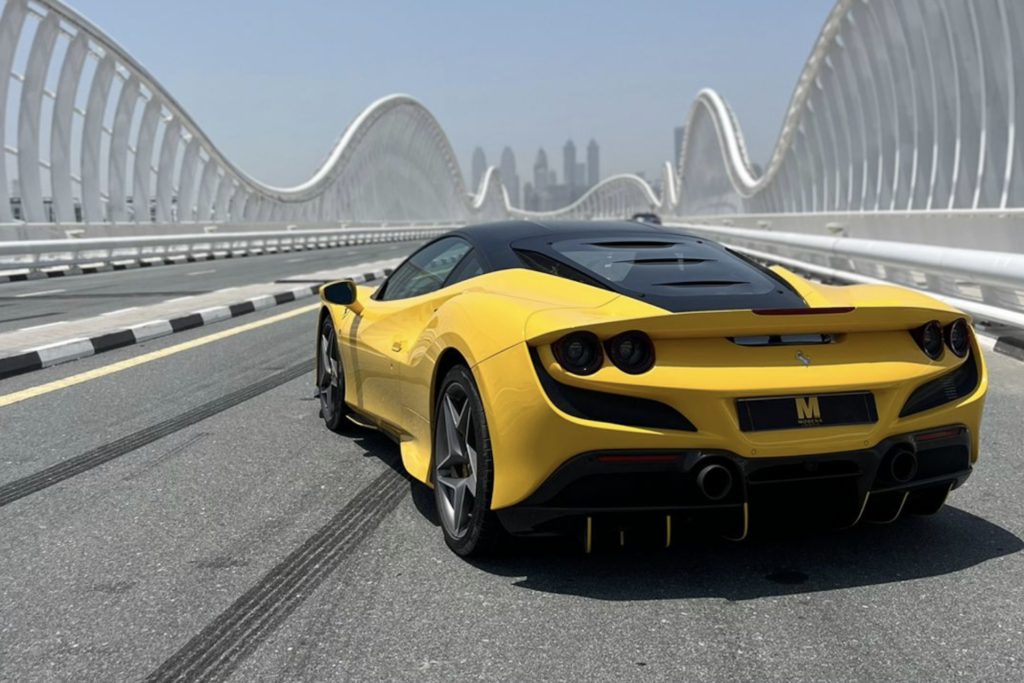
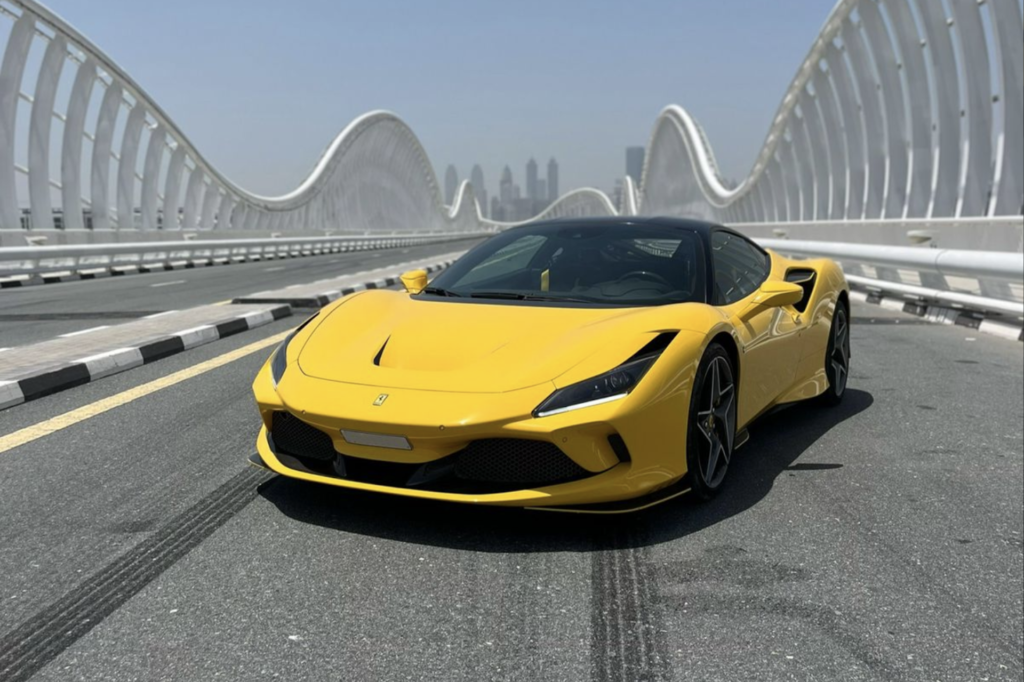
Rent a Ferrari F8 Tributo in Dubai!
Ferrari Today – What Remains of Enzo’s Legacy?
The production facilities remain in Maranello. Output is deliberately limited to a few tens of thousands of units per year – exclusivity here is a strategy, not an accident.
In 2022, Ferrari unveiled the Purosangue: the brand’s first ever four-door model with raised suspension. Many saw it as a departure from the brand’s DNA, but the market responded with enthusiasm. Another milestone is on the horizon: Ferrari’s first fully electric car, the “Luce,” is set to debut in 2026.
Scuderia Ferrari remains the only team to have competed in Formula 1 without interruption since the championship’s inaugural season in 1950. It is an achievement no other brand in the history of motorsport has managed to replicate.
FAQ
When was the Ferrari brand founded?
Ferrari was officially founded in 1947, when the first car – the Ferrari 125 S – left the factory in Maranello.
What does the prancing horse in the Ferrari logo represent?
The black rearing horse comes from the emblem painted on the aircraft of Francesco Baracca, an Italian First World War flying ace who was killed in 1918. The pilot’s mother proposed that Enzo use the symbol after his racing victory in 1923, while Enzo himself added the yellow background as a tribute to his hometown of Modena.
Does Ferrari still belong to Fiat?
No. Although Fiat acquired a 50% stake in 1969, Ferrari today operates as a fully independent publicly listed company. Since 2015 it has been listed on the New York Stock Exchange under the ticker symbol RACE.