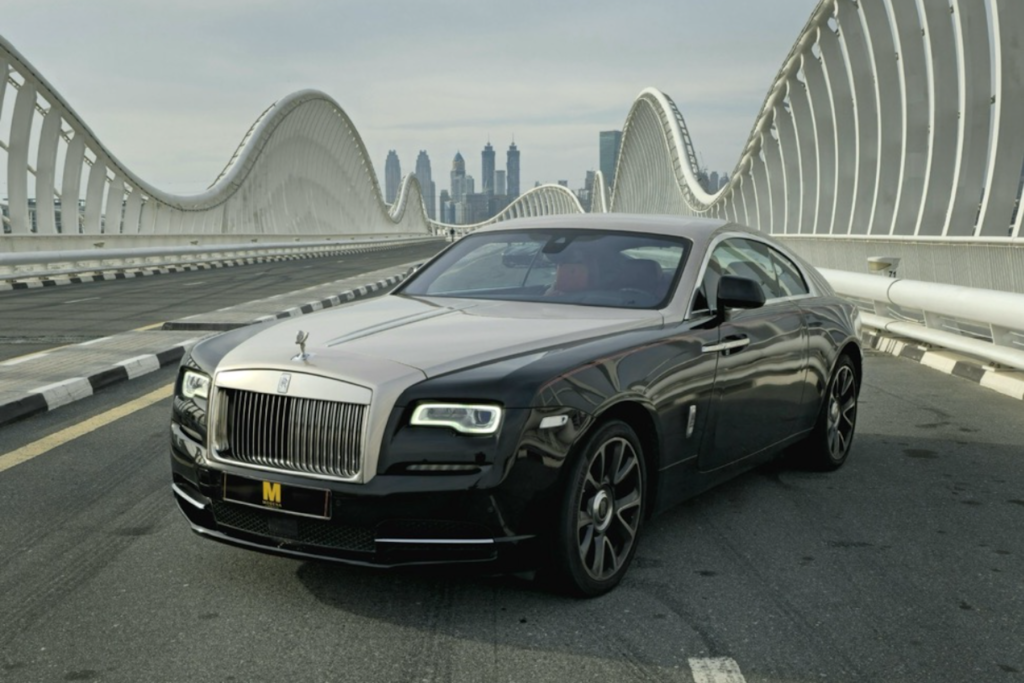
When you think of Rolls-Royce, you probably picture an elegant limousine, a silver statuette on the bonnet, and a price that never appears in any brochure. Yet the story of Rolls-Royce began not with luxury, but with two entirely different men and one shared conviction – that a car could be perfect.
Two Men from Different Worlds
Henry Royce was born in 1863 in Alwelton, the fifth child of a poor miller. When he was ten, his father died, the boy dropped out of school and began earning a living as an errand boy. With no formal technical education, through sheer determination alone, he opened an electrical engineering workshop in Manchester in 1884. The company grew quickly. In 1904, Royce bought a second-hand Decauville, stripped it down to its components and rebuilt it so thoroughly that an entirely new vehicle emerged – quieter, more powerful and more reliable than the original.
Charles Rolls lived in a completely different world. Born in 1877 in London as the son of a wealthy lord, he studied at Eton and Cambridge, raced cars and broke speed records. In 1903 he drove a Mors at 133.3 km/h, setting an absolute world record. He also ran a dealership selling cars imported from France. He was the first person to fly an aeroplane across the English Channel without landing, in both directions. He died in a flying accident in 1910, aged 33.
Their paths crossed on 4 May 1904 at the Midland Hotel in Manchester. The intermediary was Henry Edmunds – an acquaintance of Rolls who had previously purchased a car built by Royce. Rolls was delighted. They quickly agreed on the terms of their partnership: Royce would manufacture, Rolls would sell, exclusively under the name “Rolls-Royce“.
1904 or 1906 – When Was Rolls-Royce Really Founded?
Both dates are correct, but they refer to different facts.
In December 1904, the first cars of the brand – the 10 hp, 15 hp and 20 hp models – were presented publicly at the Paris Motor Show. Production had begun, the agreement was in place. However, the formal registration of Rolls-Royce Limited as a company did not take place until 15 March 1906, with a share capital of £60,000. Royce took on the role of chief engineer, Rolls that of commercial director.
If someone asks when Rolls-Royce was founded as a car brand, the answer is 1904. If they are asking about the company, it is 1906.
Silver Ghost – The Car That Built the Brand
In 1906, Royce designed a new model provisionally designated the 40/50 hp. It was a breakthrough. Claude Johnson, the company’s managing director – jokingly referred to as “the hyphen in Rolls-Royce” – had one of the first examples finished in silver and christened it like a yacht: Silver Ghost.
The name caught on immediately. In 1907, the Silver Ghost underwent a reliability trial – it covered 14,371 miles (approximately 23,000 km) without a single mechanical failure. The press proclaimed it “the best car in the world.” Over 6,000 examples of the model were built, and its chassis served as the basis for the first British armoured car, which served in both World Wars.
Spirit of Ecstasy – A Statuette with a Dark History
The first Rolls-Royces carried no figurine on the bonnet – only the company emblem. Everything changed because of Lord Montagu of Beaulieu, who in 1909 commissioned sculptor Charles Sykes to create a private mascot for his Silver Ghost. The model was Eleanor Velasco Thornton, Montagu’s secretary and, according to well-documented sources, his secret partner. The figurine – a woman with a finger to her lips – was named “The Whisper.” It symbolised the secret of their affair.
When Claude Johnson decided the company needed its own official mascot, he turned to Sykes once again. In February 1911, the sculptor presented the Spirit of Ecstasy – a woman leaning forward with arms outstretched, in a flowing gown. The model was Eleanor Thornton once more.
On 30 December 1915, Thornton died when a torpedo from a German U-boat sank the SS Persia in the Mediterranean Sea. Lord Montagu survived after 38 hours on a raft. The figurine, originally conceived to commemorate a secret romance, became one of the most recognisable symbols in the history of motoring.
Factories – From Manchester to Goodwood
The history of Rolls-Royce is also a history of constant relocations.
Manchester (1904–1908) – first production at Royce’s factory
Derby (1908) – the new factory was designed by Royce himself; the city won the company over with its low electricity prices
Springfield, Massachusetts, USA (1921–1931) – opened in response to growing demand; closed as a result of the Great Depression; 1,701 examples of the “Springfield Ghosts” were produced there
Crewe (from 1938) – the factory was built by the British government before the Second World War; Merlin engines for Spitfire and Hurricane fighters were produced here; after the war – car production
Goodwood, West Sussex (from 2003) – the current Rolls-Royce Motor Cars factory, built from scratch by BMW
The wartime chapter deserves particular emphasis: the Merlin engines represent the moment when a relatively small car manufacturer became a critical element of British war industry. The sheer scale of demand fundamentally changed the nature of the company.
Who Owns Rolls-Royce Today?
This is one of the most frequently confused threads in the brand’s history and it is worth clarifying precisely.
In 1931, Rolls-Royce acquired Bentley, whose finances had not survived the Great Depression. For the following decades, the two marques were almost identical, differing primarily in their radiator grilles.
In 1971, Rolls-Royce Limited entered voluntary liquidation – the company was unable to cover the catastrophically overrun costs of developing the RB211 jet engine. The British government took it over to prevent total collapse. In 1973, a formal split took place: Rolls-Royce Motors (cars) and Rolls-Royce plc (aero engines) became separate entities. In 1987, under Margaret Thatcher, the aviation division returned to the stock exchange as part of a privatisation programme.
In 1998, the Volkswagen Group purchased the brand along with the factory in Crewe and the Bentley marque. BMW, however, paid separately – £40 million solely for the rights to use the Rolls-Royce name in the automotive industry. This is an important distinction: VW kept the factory and Bentley, BMW received only the name. The Germans had to build everything from scratch, including the factory in Goodwood.
Since 2003, Rolls-Royce Motor Cars has operated as a wholly owned subsidiary of BMW AG. Rolls-Royce plc – the aero engine manufacturer – is today a separate, publicly listed company with no formal connection to the car manufacturer.
Rent a Rolls-Royce Wraith in Dubai!
FAQ
When was Rolls-Royce founded?
The first cars of the brand were presented in December 1904 at the Paris Motor Show, however Rolls-Royce Limited was officially registered as a company on 15 March 1906.
Who owns the Rolls-Royce brand?
The rights to the Rolls-Royce brand in the automotive industry belong to the German BMW AG, which paid £40 million for them in 1998. Car production has taken place since 2003 at the factory in Goodwood, England.
What does the Spirit of Ecstasy represent and where does it come from?
The Spirit of Ecstasy is a figurine designed in 1911 by sculptor Charles Sykes – its model was Eleanor Velasco Thornton, secretary and secret partner of Lord Montagu of Beaulieu. For over a hundred years it has adorned the bonnet of every Rolls-Royce.